A folio on the embroidered pictures of India
The art of the embroidered picture.
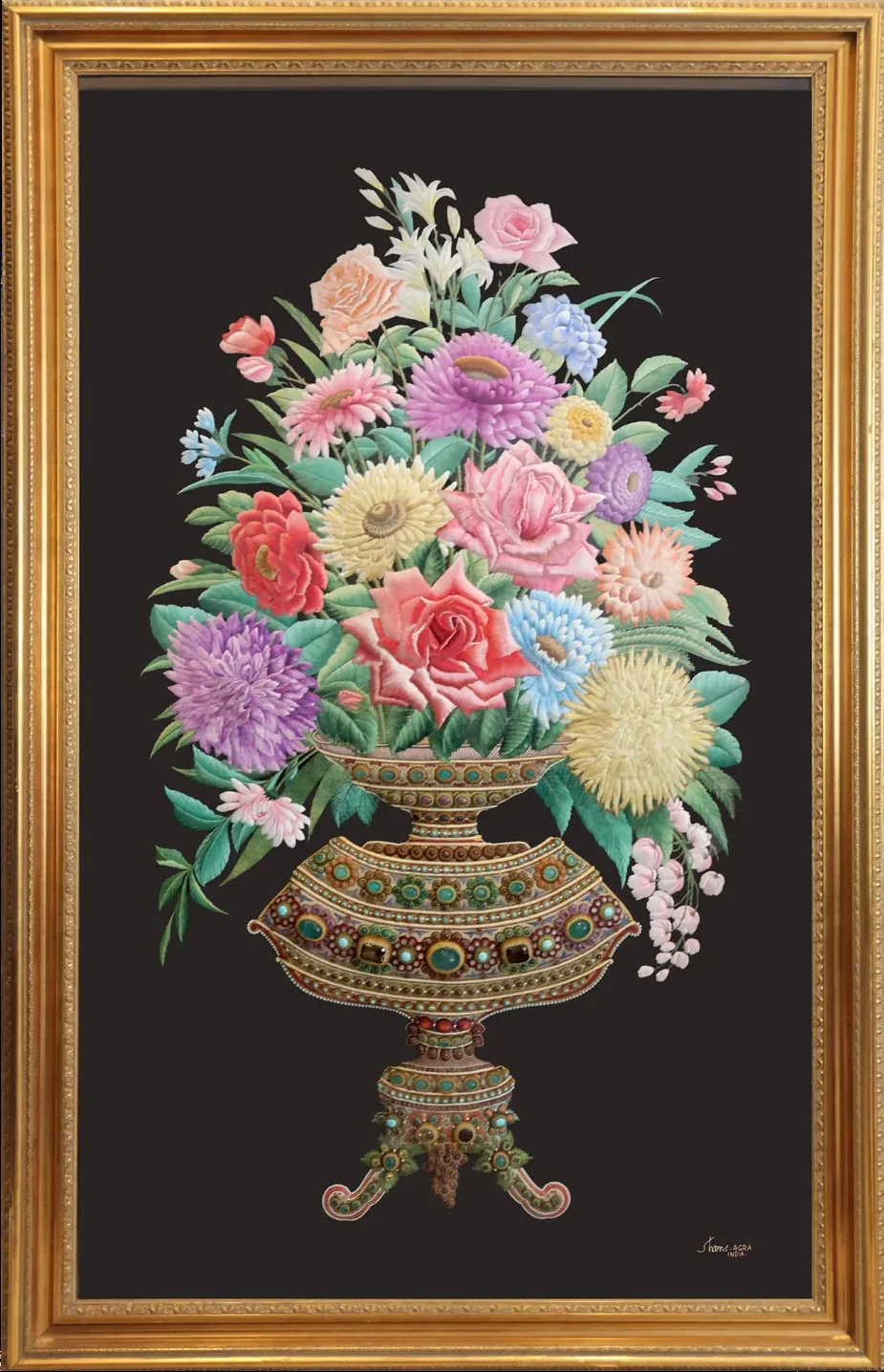
Indian embroidery is most often studied on cloth that was worn, hung or carried in ceremony. The framed embroidered picture, made to be read as an image, is a less familiar branch of the tradition. This folio examines one such work, The Vase by Sheikh Shams Uddin of Agra, together with the records that accompany it.
Reading the surface
Four ways into a single work.
Composition
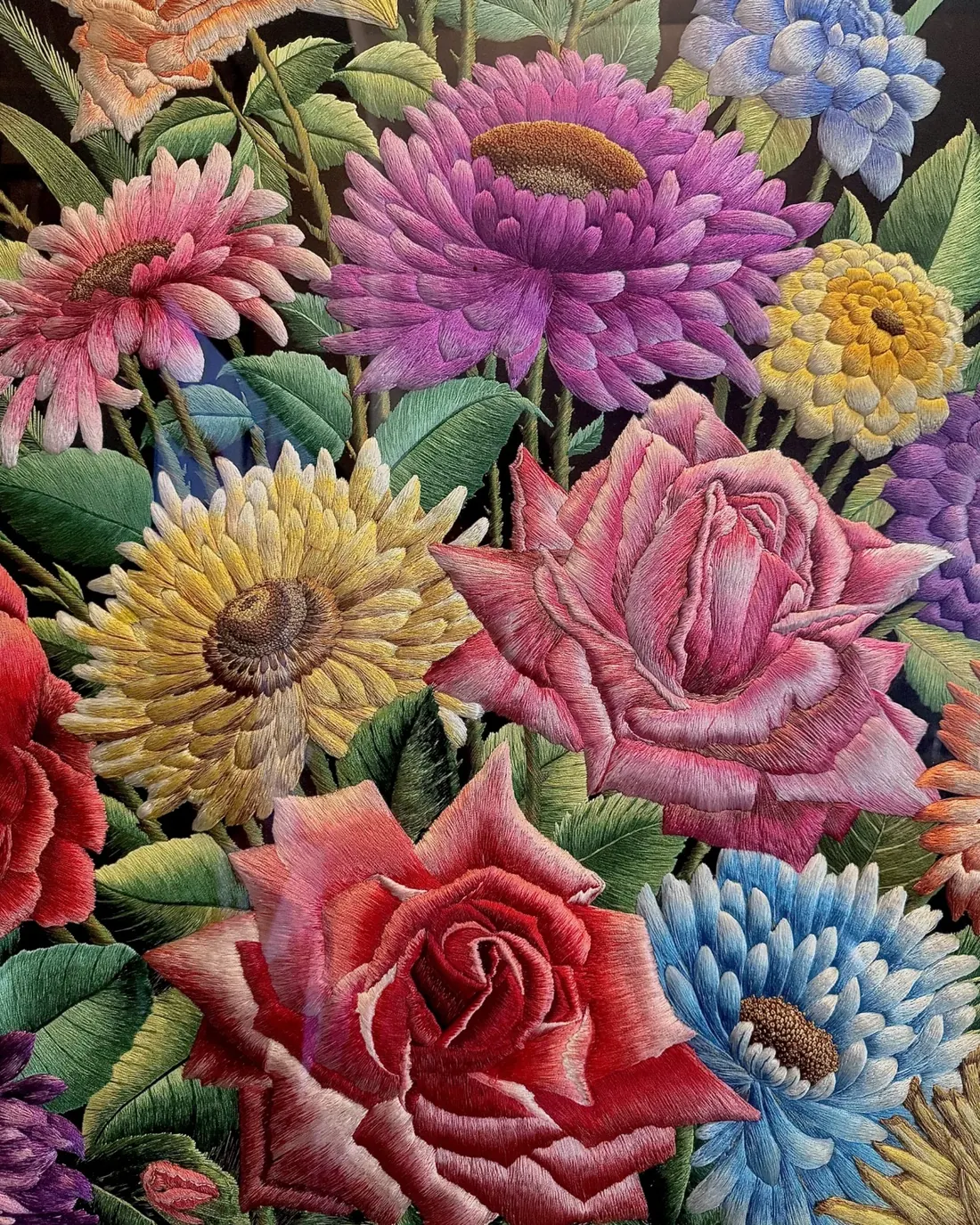
The composition is organised on a vertical axis. A dense bouquet of roses, chrysanthemums and smaller blooms rises from a footed vessel and spreads across a dark ground, so that colour and relief are read against shadow.
Silk in relief
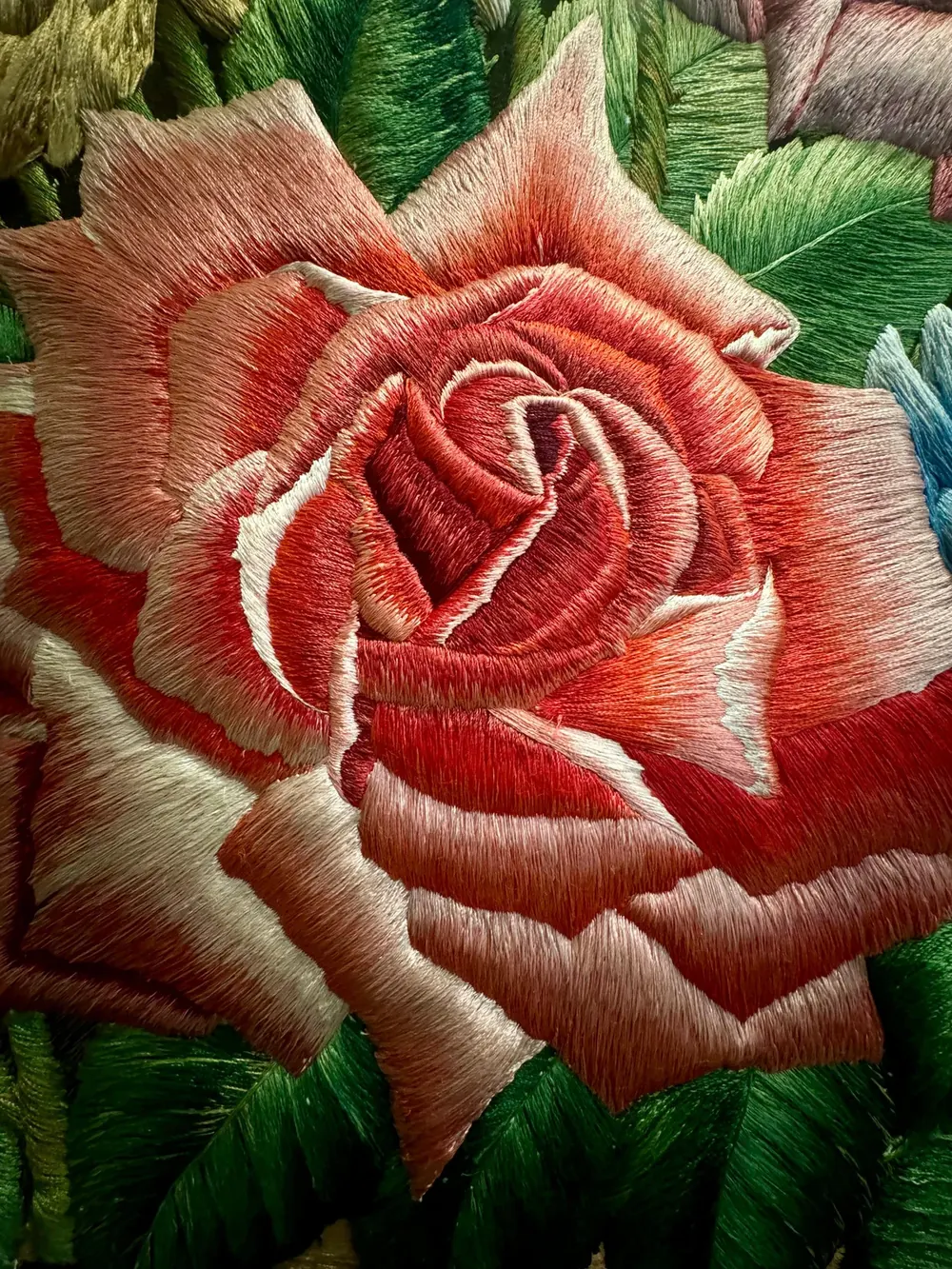
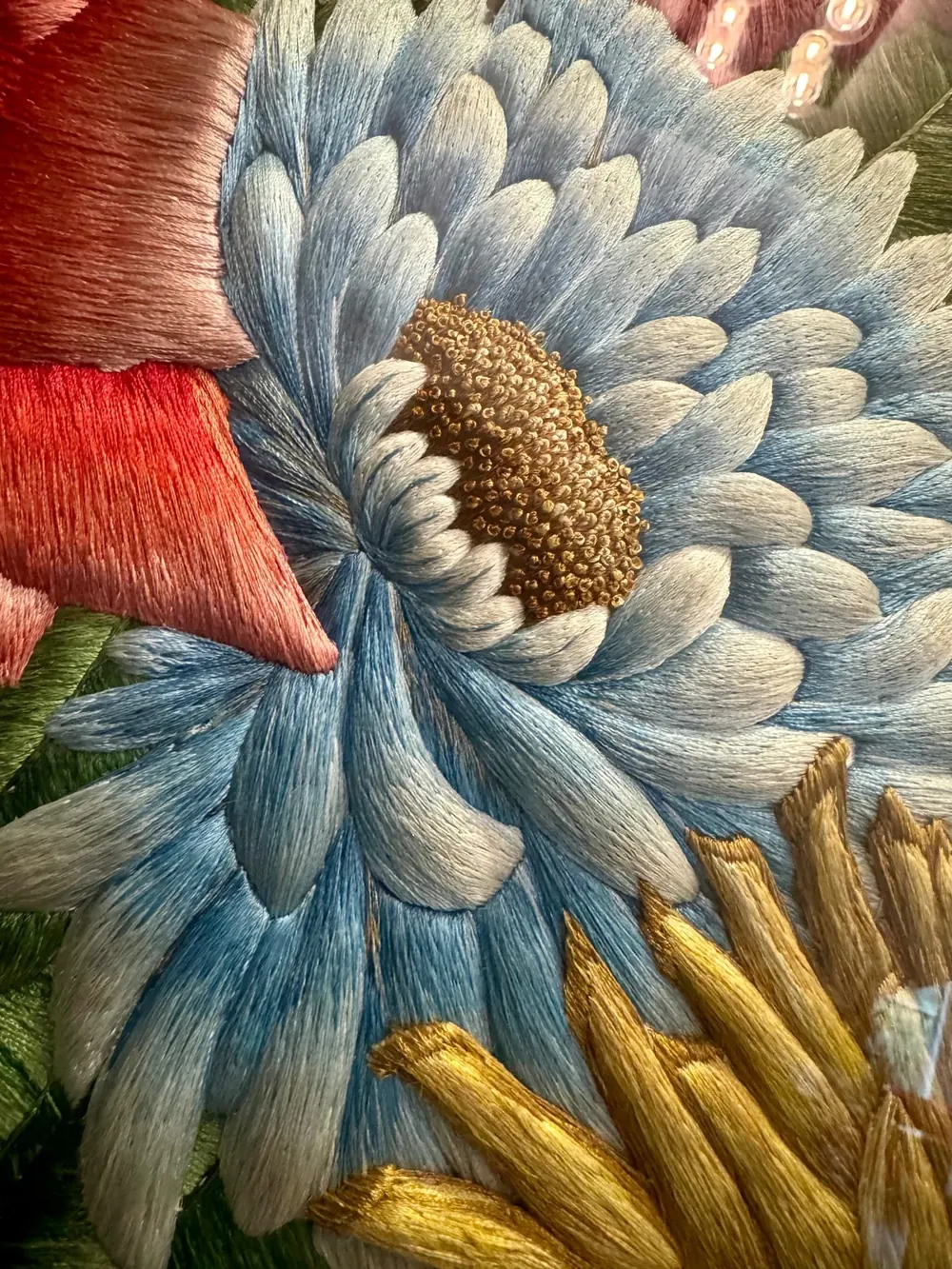
The flowers are worked in silk raised from the ground. The direction of the stitch follows the form of each petal, and it is this change of direction, rather than any painted shading, that allows light to describe the shape.
The vessel
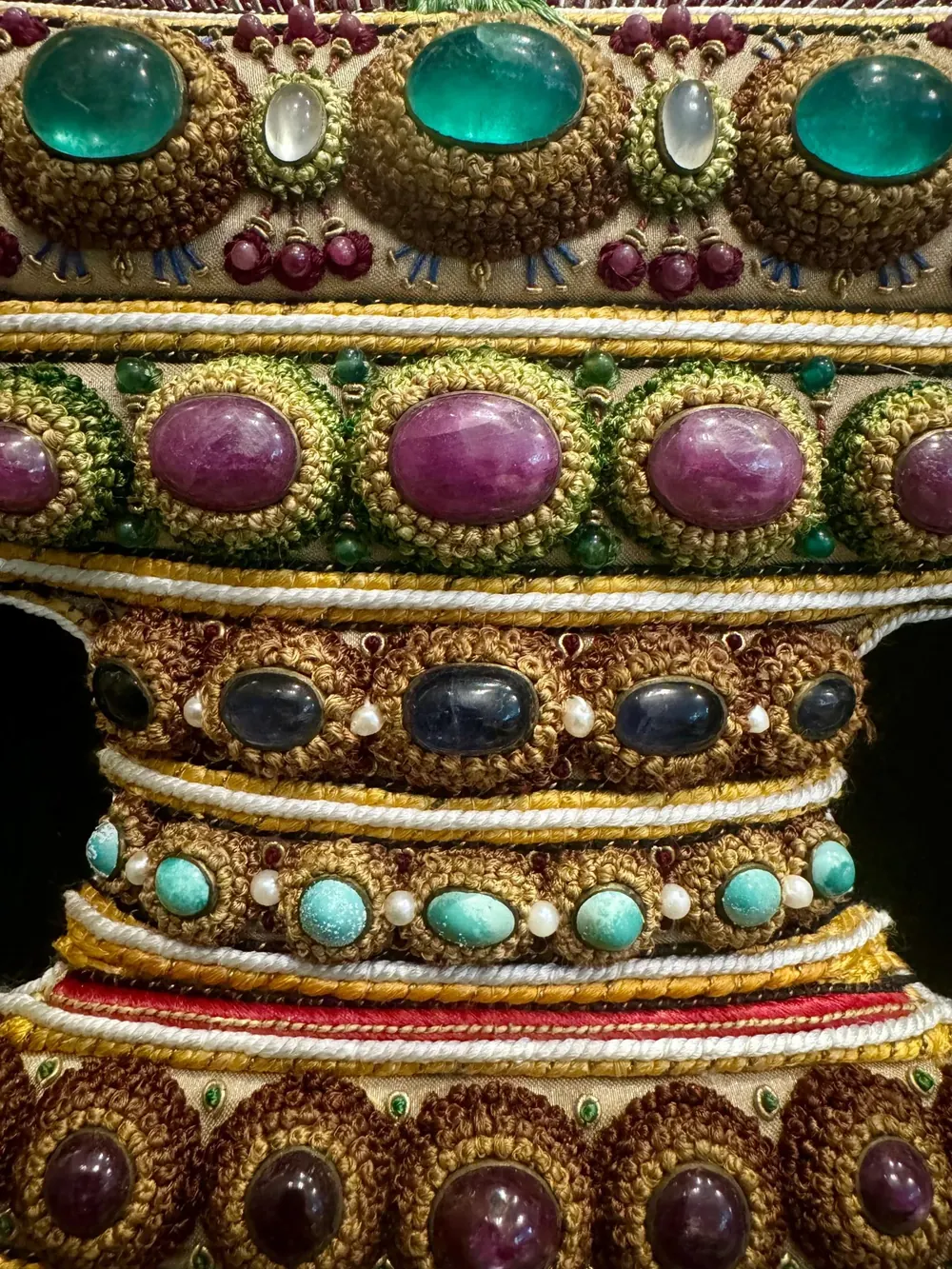
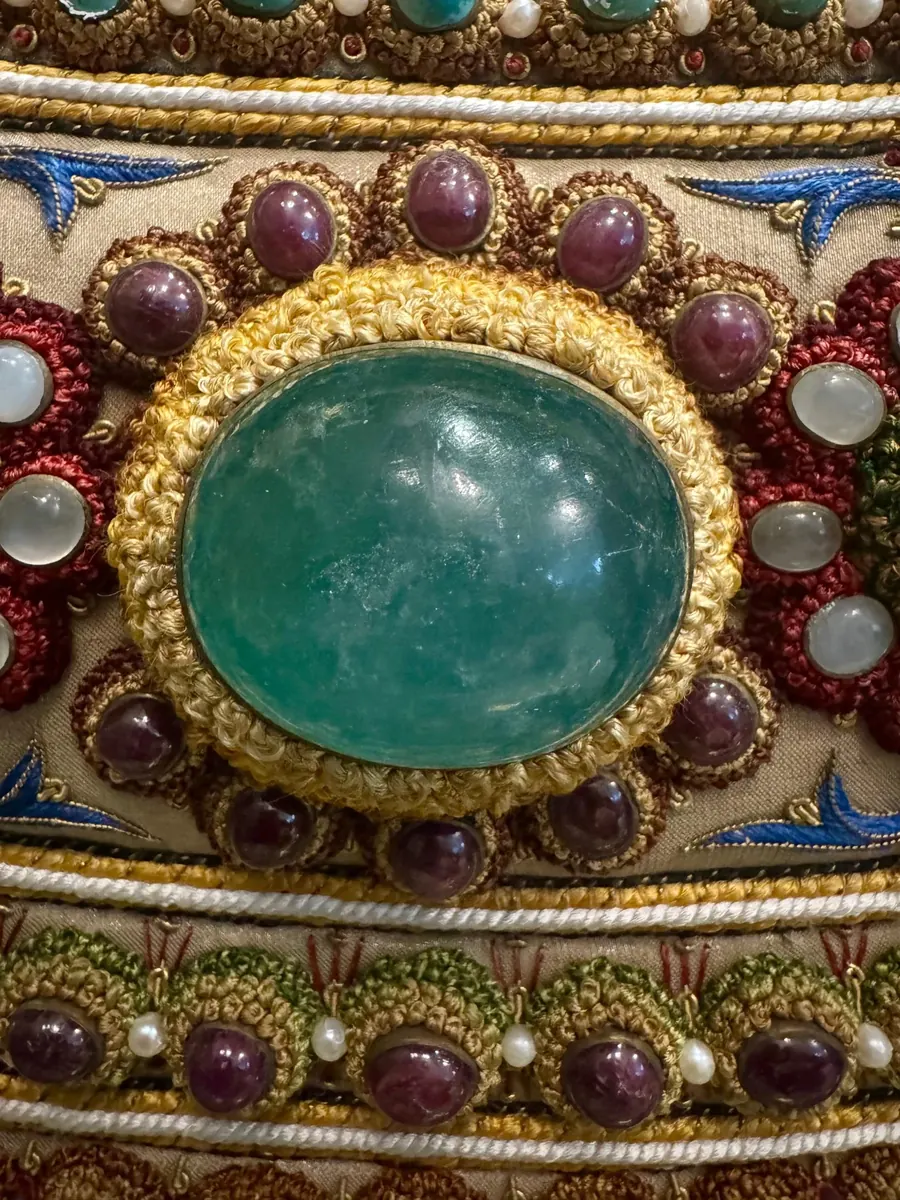
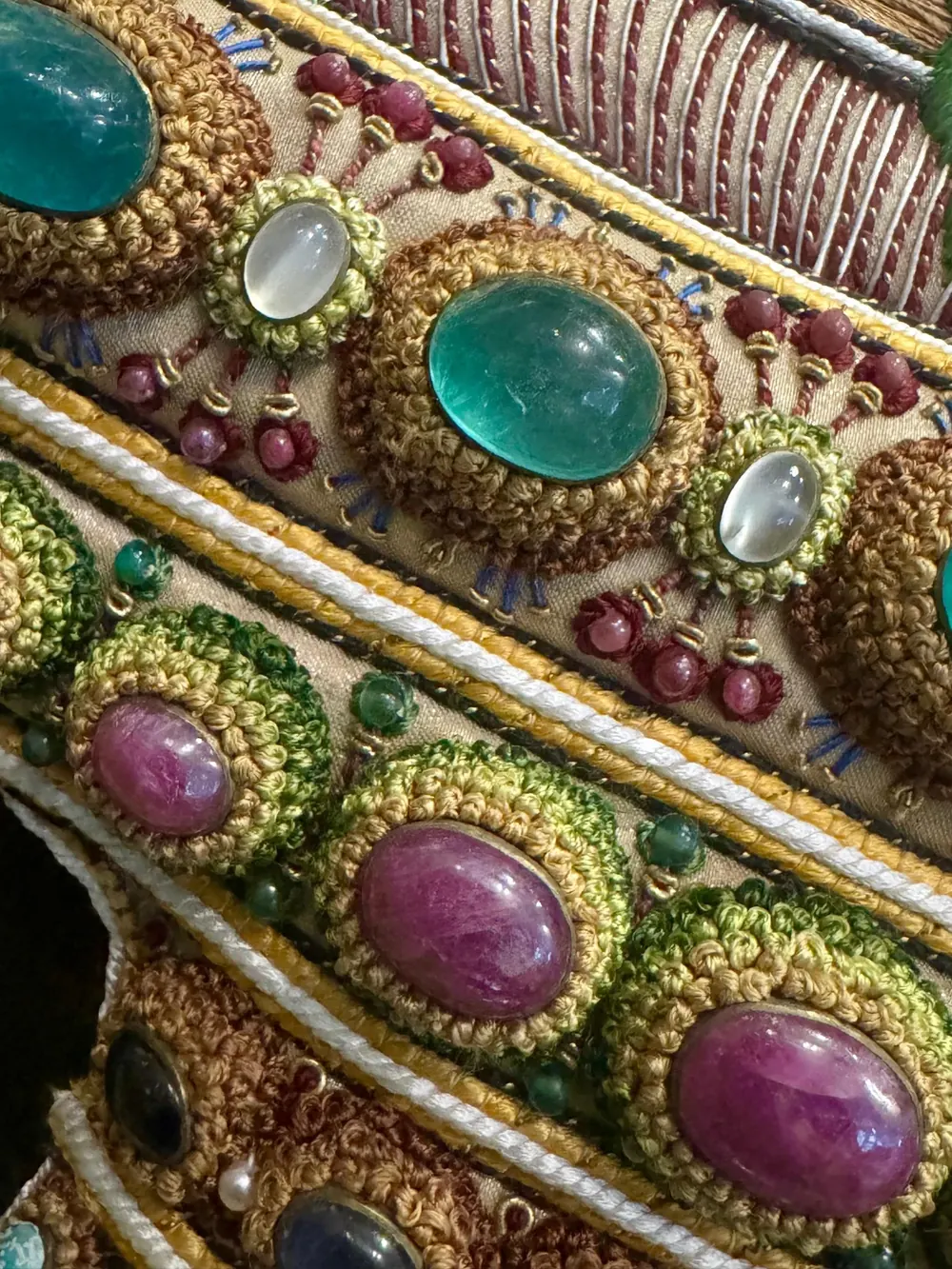
The vessel is constructed from successive embroidered bands. The family declaration records emerald cabochons, rubies, pearls and turquoise among its materials, each held in a mount of coiled thread.
The inscription
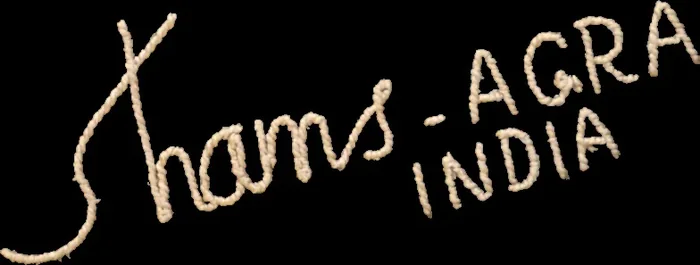
At the foot of the work the maker has embroidered his name and city: Shams, Agra, India. The inscription binds the object to a named artist and a place of making.
The folio
Three studies, one object.
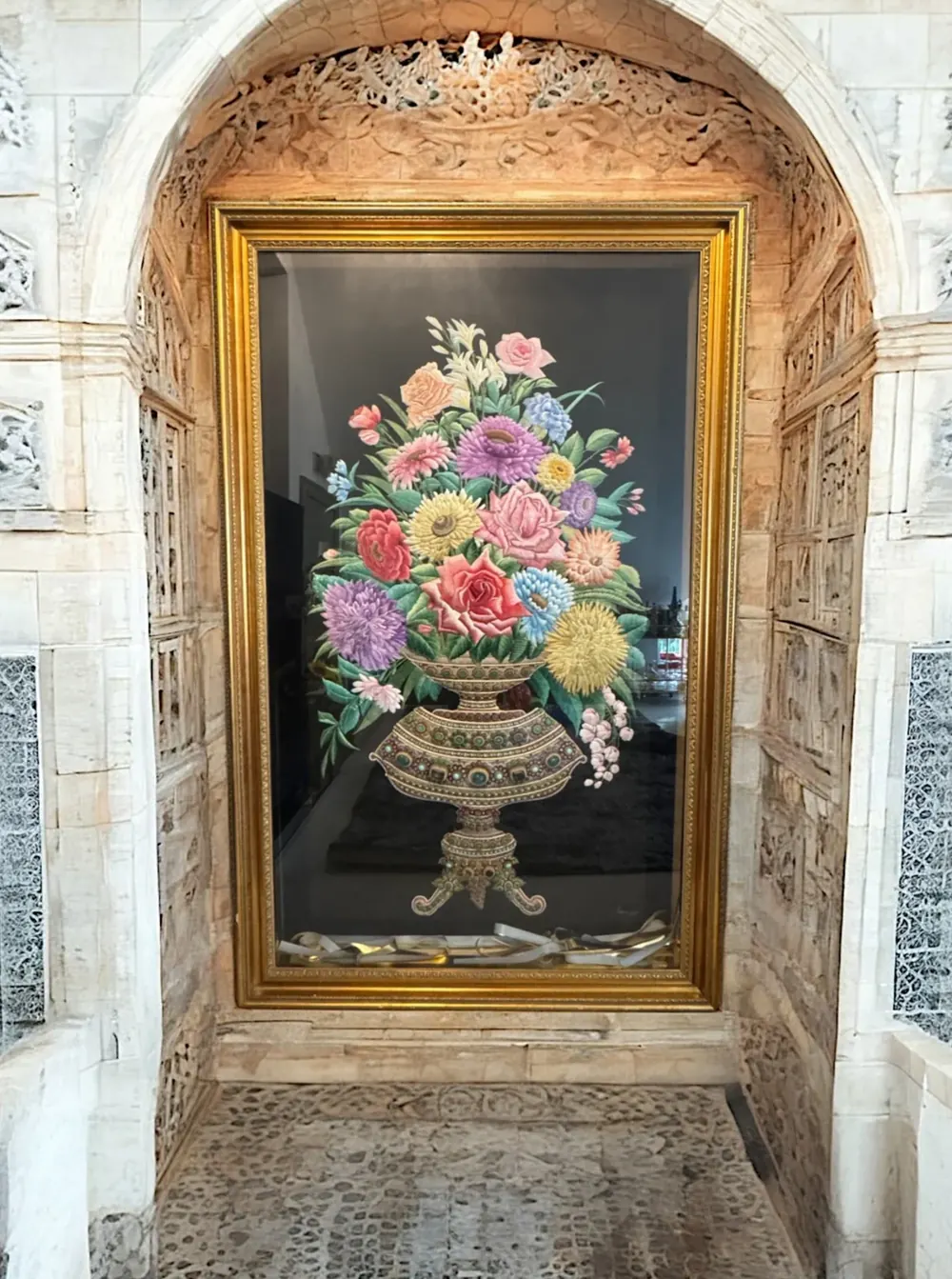
The Vase
Medium, date, inscription, materials and history, set out in the form of a catalogue entry.
Read the entry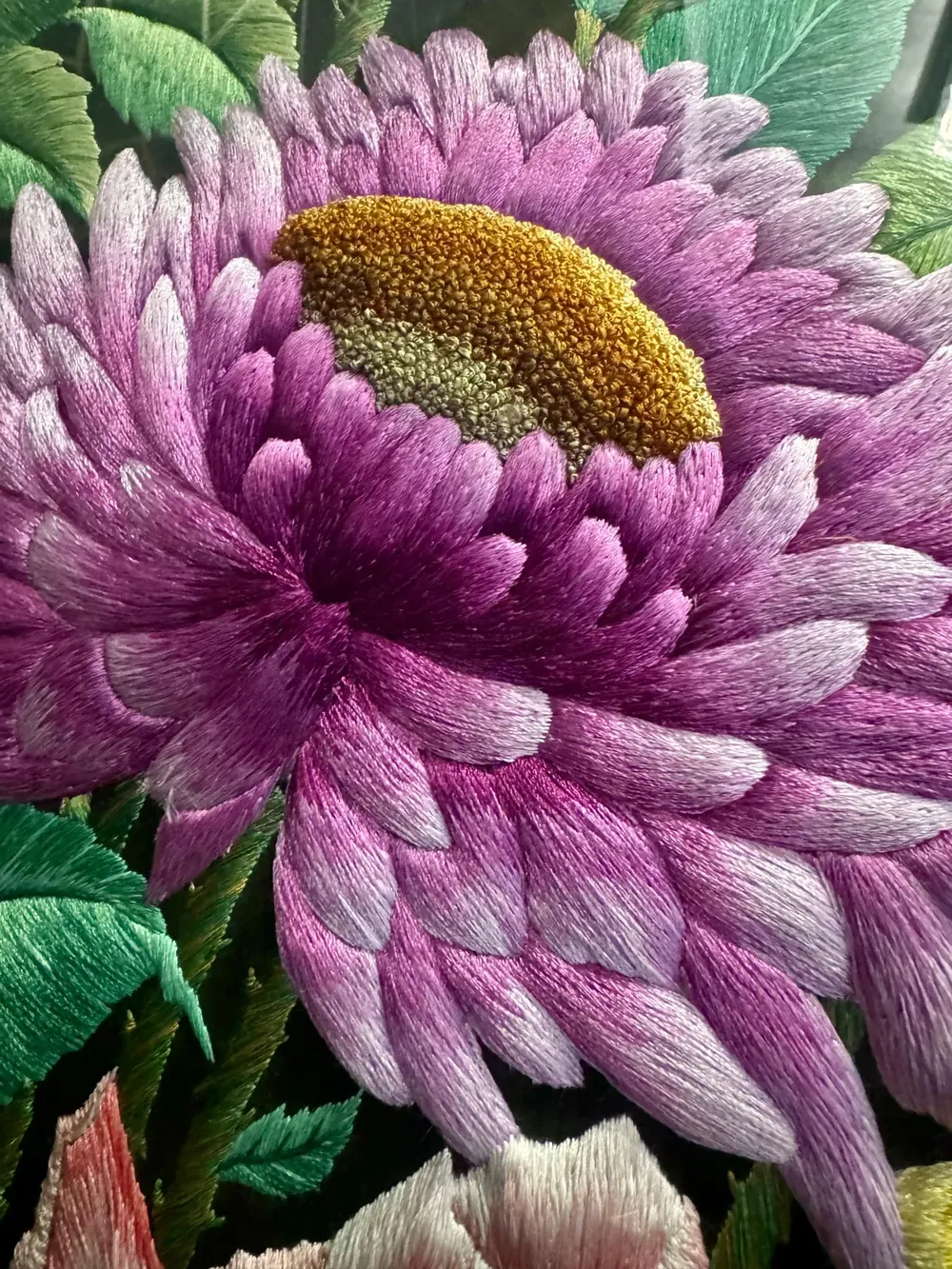
On zardozi
The Agra tradition of metallic thread embroidery and a method for close looking.
Read the study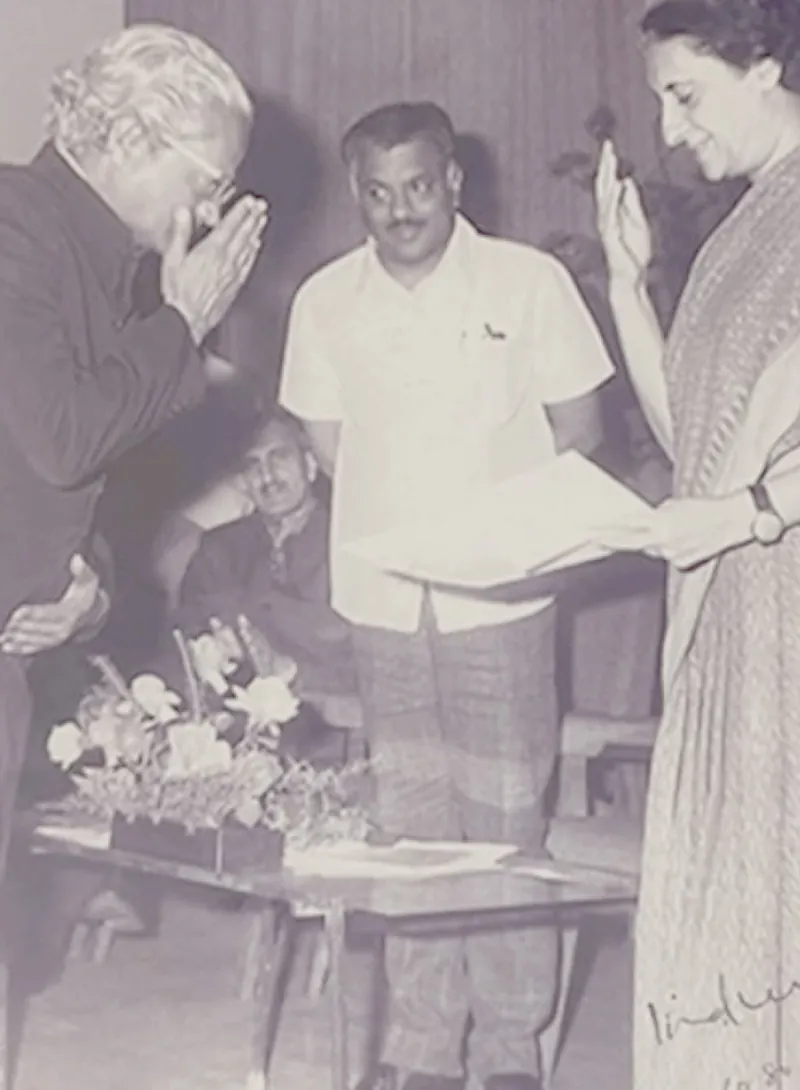
Provenance
The five records that stand behind the work, and the questions they leave open.
Read the studyThe maker
Sheikh Shams Uddin of Agra.
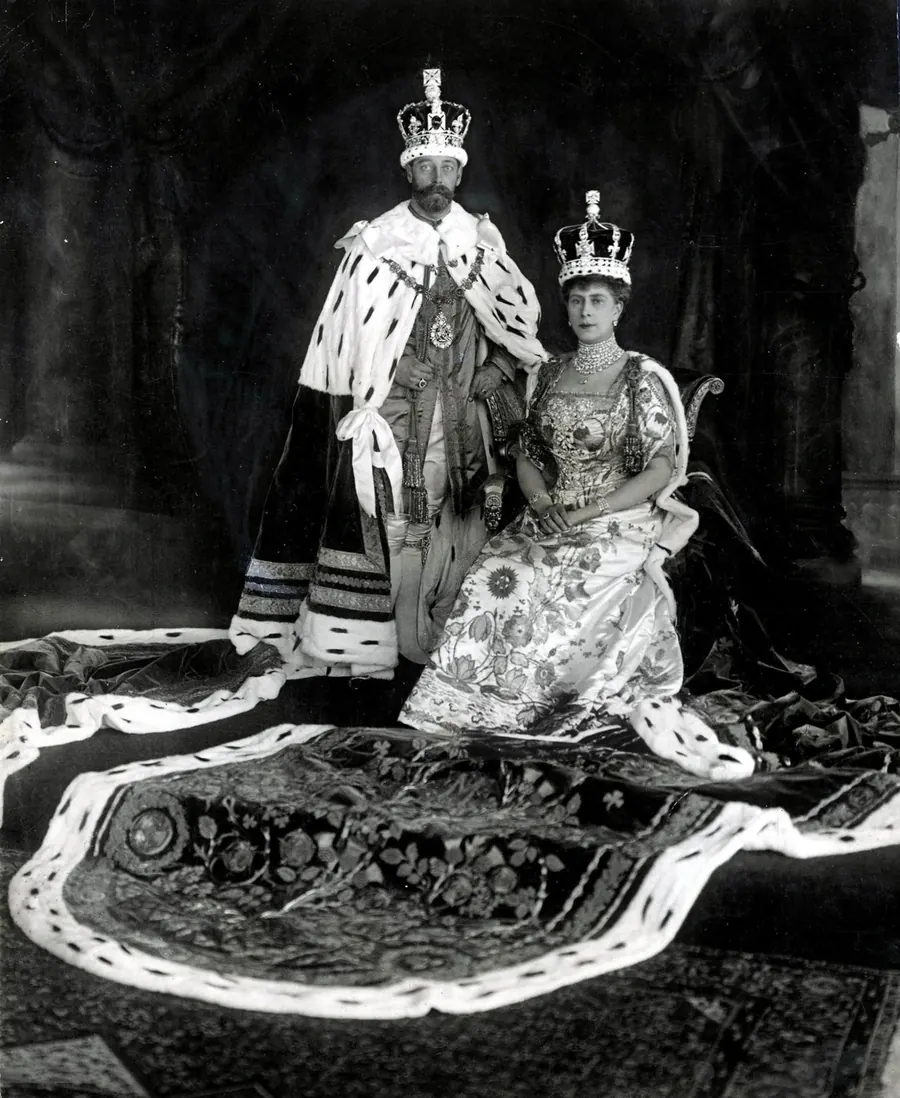
Sheikh Shams Uddin worked in Agra, a city long associated with zardozi, the Indian embroidery tradition built on metallic thread. The family biography places him within a line of embroiderers and records ceremonial work by earlier generations for King George V and the British royal household.
The Government of India's Padma Awards notification for 1989 lists Sheikh Shams Uddin of Agra for zari embroidery. The Padma Shri is among the country's highest civilian honours.
An official honour recorded against a named embroiderer is uncommon in a field where most makers remain anonymous.
A photograph in the family archive is identified in the family biography as the artist receiving recognition from Indira Gandhi. Condé Nast Traveller, writing in 2022, reports that he was also honoured by Ronald Reagan.
His achievement lies in moving the technique from ornament to picture: silk raised into relief, set beside gem materials and densely worked borders, composed to be framed and read.
Continue the folio